From primary witness to publishable text
The unified environment for researchers to discover manuscripts, transcribe folios, and produce critical editions.
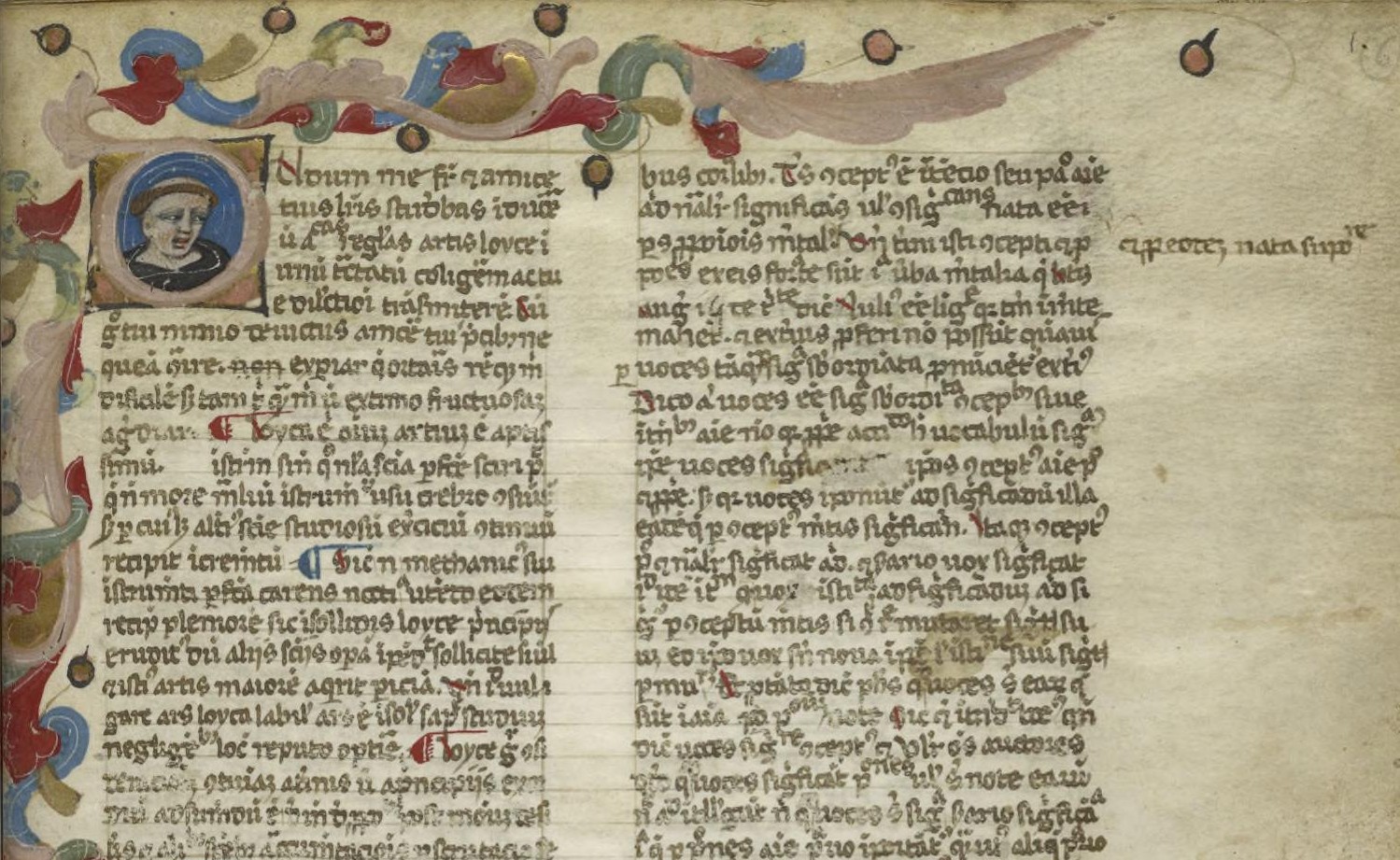
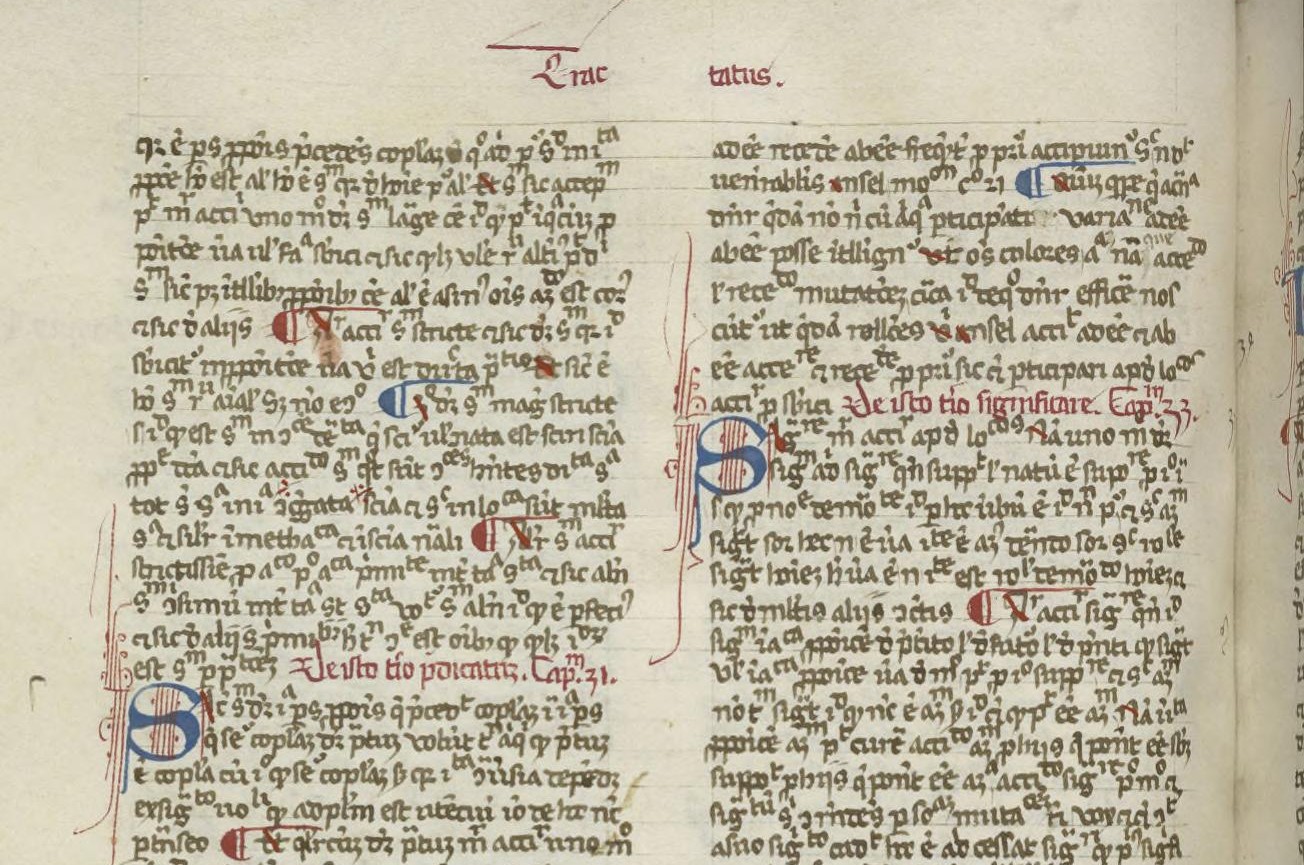
Transcription
Quam magnos veritatis sectatoribus afferat fructus sermocinalis scientia, quam logicam dicimus, multorum peritorum docet auctoritas, ratioque et experientia liquido comprobat et convincit. Unde Aristoteles, auctor praecipuus huius scientiae, nunc introductoriam methodum, nunc sciendi modum, nunc scientiam omnibus communem et viam veritatis appellat, dans ex his intelligere quod nulli ad sapientiam patet accessus nisi in scientia logica erudito.
Translation
The authority of many experts teaches, and reason and experience clearly prove and convince, how great the fruits of the science of discourse, which we call ‘logic’, bring to the followers of truth. Hence Aristotle, the chief author of this science, sometimes calls it an introductory method, sometimes a way of knowing, sometimes a science common to all and the way of truth, so that we can understand from these that no one has access to wisdom except one who is learned in the science of logic.
Transcription
'Significare' multipliciter accipitur apud logicos. Nam uno modo dicitur signum aliquid significare quando supponit vel natum est supponere pro illo, ita scilicet quod de pronomine demonstrante illud per hoc verbum 'est' illud nomen praedicatur. Et sic 'album' significat Sortem; haec enim est vera 'iste est albus', demonstrando Sortem. Sic 'rationale' significat hominem; haec enim est vera 'iste est rationalis', demonstrando honminem. Et sic de multis aliis concretis.
Translation
'To signify' is taken in many ways among logicians. For in one way a sign is said to signify some thing when it supposits, or is suited to supposit for that thing, namely, so that the name is predicated by means of the verb 'is' of a pronoun pointing to the thing. And so 'white' signifies Socrates, for 'that person is white' is true, pointing to Socrates. Thus 'rational' signifies a man, for 'He is rational' is true, pointing to a man. And so on for many other concrete names.
Transcription
Quam magnos veritatis sectatoribus afferat fructus sermocinalis scientia, quam logicam dicimus, multorum peritorum docet auctoritas, ratioque et experientia liquido comprobat et convincit. Unde Aristoteles, auctor praecipuus huius scientiae, nunc introductoriam methodum, nunc sciendi modum, nunc scientiam omnibus communem et viam veritatis appellat, dans ex his intelligere quod nulli ad sapientiam patet accessus nisi in scientia logica erudito.
Translation
The authority of many experts teaches, and reason and experience clearly prove and convince, how great the fruits of the science of discourse, which we call ‘logic’, bring to the followers of truth. Hence Aristotle, the chief author of this science, sometimes calls it an introductory method, sometimes a way of knowing, sometimes a science common to all and the way of truth, so that we can understand from these that no one has access to wisdom except one who is learned in the science of logic.
Transcription
'Significare' multipliciter accipitur apud logicos. Nam uno modo dicitur signum aliquid significare quando supponit vel natum est supponere pro illo, ita scilicet quod de pronomine demonstrante illud per hoc verbum 'est' illud nomen praedicatur. Et sic 'album' significat Sortem; haec enim est vera 'iste est albus', demonstrando Sortem. Sic 'rationale' significat hominem; haec enim est vera 'iste est rationalis', demonstrando honminem. Et sic de multis aliis concretis.
Translation
'To signify' is taken in many ways among logicians. For in one way a sign is said to signify some thing when it supposits, or is suited to supposit for that thing, namely, so that the name is predicated by means of the verb 'is' of a pronoun pointing to the thing. And so 'white' signifies Socrates, for 'that person is white' is true, pointing to Socrates. Thus 'rational' signifies a man, for 'He is rational' is true, pointing to a man. And so on for many other concrete names.
Universal Discovery
Search, browse, and compare folios from the Vatican, Bodleian, BnF, and more—all in a single interface.
Coordinated Workspace
Transcribe and translate in side-by-side workspaces that preserve context, with LaTeX critical edition and Richtext support.
Augmented Philology
Leverage the "Council of Translators"—our auditable AI model, responsive to your translation tendencies and preferences—to accelerate your drafting.